Baby Registry Checklist 2026: What You Actually Need
Baby Registry Checklist 2026: What You Actually Need
Key Takeaway: A well-planned baby registry in 2026 averages $2,800 to $3,200 in total value and saves families $2,000 to $2,400 through gifted items alone. Focus on versatile, grow-with-baby essentials across 7 core categories, use a universal registry to add items from any store, and skip the single-retailer trap. This checklist walks you through exactly what to add, what to skip, and how to share it all in one free link.
Building a baby registry can feel like assembling furniture without instructions. There are hundreds of products, a sea of five-star reviews, and well-meaning opinions coming from every direction. The trick is knowing which items you will actually reach for at 3 AM versus which ones collect dust in a closet.
This 2026 checklist cuts through the noise. It is organized by category, backed by current pricing, and designed to work whether you are a first-time parent or adding a second child to the family.
What Are the Must-Have Baby Registry Categories in 2026?
Every baby registry should cover seven core categories: sleep, feeding, diapering, travel, nursery, bath and care, and clothing. Within those categories, prioritize the items that touch safety and daily routine first, then layer in the nice-to-haves.
Here is a category-by-category breakdown of the essentials.
Sleep
Sleep gear is the foundation of your registry because it directly impacts safety and your sanity. Start here before anything else.
- Crib or bassinet -- A CPSC-compliant crib is non-negotiable. Many families also use a bassinet for the first few months for easier nighttime feeds. The SNOO Smart Bassinet (around $1,695, or $160/month to rent) automatically soothes with motion and white noise, though a standard bassinet works perfectly well too.
- Firm crib mattress -- Must meet federal flammability and firmness standards. Budget $90 to $200.
- Fitted crib sheets (3 to 4) -- You will go through these fast. Organic cotton options from brands like Aden + Anais run $15 to $25 each.
- Sleep sacks (2 to 3) -- Safer than loose blankets. The Kyte Baby and Halo SleepSack are parent favorites at $25 to $40 each.
- Sound machine -- The Hatch Rest is the most-registered sound machine for a reason: it doubles as a nightlight and grows with your child. Around $40 to $70.
Feeding
Whether you plan to breastfeed, formula-feed, or do both, the feeding category requires the most upfront research.
- Breast pump -- A double electric pump like the Spectra S2 is consistently recommended by lactation consultants. Check with your insurance first since most ACA-compliant plans cover a pump at zero cost.
- Bottles (4 to 6) -- Choose bottles compatible with multiple nipple flows so you can adjust as your baby grows. Dr. Brown's and Comotomo are top picks at $6 to $10 each.
- Bottle brush and drying rack -- Small cost, daily use. Budget $10 to $20 for both.
- High chair -- The Stokke Tripp Trapp ($275) grows from infant to adult. For a budget option, the IKEA Antilop at $25 is beloved by pediatric feeding therapists.
- Burp cloths (8 to 12) -- Muslin cloths from Aden + Anais or Copper Pearl run $15 to $30 for a pack.
- Nursing pillow -- The Boppy or My Brest Friend at $35 to $50 supports comfortable feeding positions.
Diapering
You will change an estimated 2,500 diapers in the first year alone. Stock this category generously.
- Diapers (newborn and size 1) -- Register for both sizes. Subscription services like Honest and Coterie simplify restocking. Budget $70 to $90 per month.
- Wipes -- Water-based, fragrance-free wipes are the safest bet for newborn skin. WaterWipes and Pampers Aqua Pure are top sellers.
- Diaper cream -- Aquaphor or Desitin, around $8 to $12 per tube.
- Changing pad and covers (2 -- 3) -- The Keekaroo Peanut Changer ($135) is wipeable and needs no covers. Traditional pads run $25 to $40 plus covers.
- Diaper pail -- The Ubbi steel diaper pail ($80) uses regular trash bags instead of expensive refill cartridges.
Travel and Gear
Your car seat is the single most important purchase on this registry. It is the one item you literally cannot bring your baby home from the hospital without.
- Infant car seat -- The Chicco KeyFit 35 ($230) and Nuna PIPA ($350) are top crash-test performers. Every seat must be installed and inspected before your due date.
- Stroller -- The UPPAbaby Vista V3 ($999) has been the most-requested stroller on baby registries for three consecutive years. The Doona car seat and stroller combo ($500) is ideal for urban families or anyone short on space since it converts from car seat to stroller in seconds.
- Diaper bag -- Look for a backpack style with insulated pockets and a changing pad. Budget $40 to $120.
- Baby carrier -- The Ergobaby Omni 360 ($180) or a simple ring sling ($60 to $90) for hands-free carrying from day one.
- Portable sound machine -- The Yogasleep Hushh clips to a stroller or car seat. Around $20.
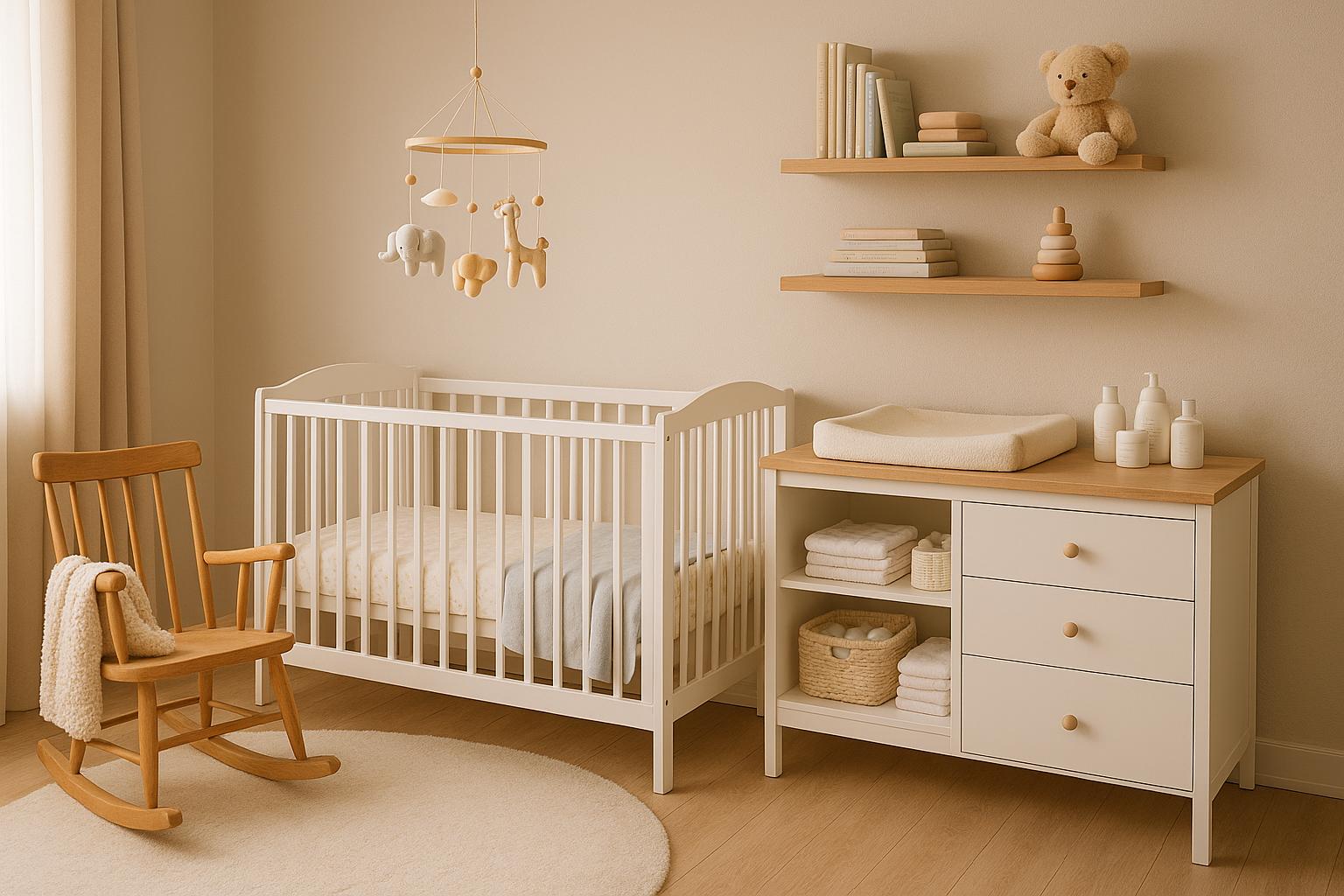
Nursery
Think function first, aesthetics second. A well-organized nursery saves time during midnight feeds and chaotic mornings.
- Dresser with changing topper -- Doubles as a changing table and outlasts a standalone changer by years. Budget $200 to $500.
- Glider or rocker -- You will log serious hours here. The Nurture& Glider and Babyletto Kiwi are popular at $500 to $900.
- Blackout curtains -- Essential for daytime naps. Budget $30 to $60.
- Baby monitor -- Smart monitors like the Nanit Pro ($300) track sleep patterns and breathing motion. A reliable audio-only monitor works for $40 to $60 if you prefer simplicity.
- Night light -- Soft, warm-toned light that will not disrupt melatonin production. The Hatch Rest covers this if you registered for it under sleep.
Bath and Care
Bath time gear is inexpensive, but you need more of it than you might expect.
- Baby bathtub -- The Skip Hop Moby or Blooming Bath, $25 to $40. Useful for the first 6 months before transitioning to the regular tub.
- Hooded towels (2 to 3) -- Budget $10 to $20 each.
- Baby nail clippers or file -- The FridaBaby electric nail file ($15) is a nervous-parent favorite.
- Thermometer -- A rectal thermometer is the gold standard for infants. The FridaBaby Quick-Read runs about $10.
- Baby-safe toiletries -- Fragrance-free wash, lotion, and shampoo. Budget $15 to $25 for a starter set.
Clothing
Babies grow shockingly fast. Register strategically and avoid overloading on one size.
- Onesies and bodysuits -- 7 to 10 in newborn and 0 to 3 month sizes. Budget $3 to $8 each.
- Sleepers with zippers -- Far easier than snaps at 2 AM. Kyte Baby and Magnetic Me are favorites at $20 to $35 each.
- Swaddle blankets (3 to 5) -- Muslin swaddles from Aden + Anais or velcro swaddles like the SwaddleMe, $10 to $30 each.
- Socks and mittens -- Babies lose socks constantly. Budget $10 to $15 for multipacks.
- One going-home outfit -- Totally optional, but many parents want a special outfit for the hospital departure.
How Does a Universal Registry Compare to Store-Specific Registries?
A universal baby registry lets you add products from any store into a single, shareable list. Store-specific registries lock you into one retailer's inventory, which typically captures only 20 to 30 percent of what you actually want. Since the average parent's ideal list spans 4 to 6 different retailers, a universal approach covers far more ground.
Here is how the major options compare in 2026.
| Feature | GiftList | Amazon | Target | Babylist |
|---|---|---|---|---|
| Cost | 100% free | Free (Prime for full discount) | Free | Free (fund fees apply) |
| Add items from any store | Yes | No (Amazon only) | No (Target only) | Yes |
| Item limits | None | None | None | None |
| Completion discount | N/A | 10% (15% with Prime) | 15% (twice) | 15% (Babylist Shop only) |
| Cash fund fees | None | No fund option | No fund option | 3% processing fee |
| Gift reservation tracking | Yes (hidden from owner) | Yes | Yes | Yes |
| Browser extension | Chrome, Safari, Edge | Chrome only | No | Chrome only |
| Collaborative editing | Yes (couples co-edit) | No | No | Yes |
| Account needed to view/buy | No | No | No | No |
| Welcome box | No | Yes (with purchase) | Yes | Yes |
The key tradeoff: store registries offer completion discounts and welcome boxes, but they fragment your list across multiple platforms. A universal registry like GiftList consolidates everything into one link while letting you shop anywhere. Many parents set up GiftList as their primary registry and create secondary store accounts just to claim the welcome boxes and completion discounts.
What Baby Registry Items Can I Skip?
Not everything marketed to new parents is worth the registry space. Knowing what to leave off is just as important as knowing what to add. Here are the most common items that experienced parents say they never used or quickly abandoned.
- Wipe warmer -- Nice in theory, but babies adjust to room-temperature wipes within days. One more thing to clean and refill.
- Shoes for newborns -- Babies do not walk. Socks with grip are all they need until they are pulling up to stand.
- Newborn-size clothes in bulk -- Many babies outgrow newborn sizes within two weeks. Register for a few and load up on 0 to 3 and 3 to 6 month sizes instead.
- Dedicated changing table -- A changing pad on top of a dresser does the same job and lasts far longer.
- Baby food maker -- A regular blender or food processor works just as well when the time comes.
- Overly specific nursery decor -- Your baby does not care about matching wall art. Redirect those gift dollars toward consumables and daily-use items.
How Do I Set Up a Baby Registry That Actually Gets Used?
The best registry is one that is easy to share, easy to shop, and easy to manage. Start by choosing a universal registry so you are not limited to a single store. Add items across a wide range of price points so every guest -- from coworkers to grandparents -- can find something that fits their budget.
Here is a step-by-step approach.
1. Create your registry early (weeks 16 to 26). This gives you time to research without the pressure of a looming shower date. On GiftList, you can create your free baby registry in under two minutes and start adding items immediately.
2. Install a browser extension. The fastest way to build a registry is to browse your favorite stores and add items in one click. The GiftList browser extension works on Chrome, Safari, and Edge, so you can save items from any retailer without switching tabs.
3. Organize by category. Group items by room or purpose (nursery, feeding, bath) so guests can scan quickly. GiftList lists let you add notes and priority tags to help guide gift-givers toward what you need most.
4. Include a mix of price points. A healthy registry includes items under $25, mid-range essentials between $50 and $150, and a few big-ticket items over $200. This ensures every guest feels comfortable contributing.
5. Share one link. Send your registry link with shower invitations, post it on your social media, or text it directly to family. GiftList gives you a single shareable URL that works on any device -- no app download or account required for gift-givers.
What Are the Biggest Baby Registry Trends in 2026?
The biggest shift in 2026 is toward eco-smart gear that grows with your baby, reducing both waste and long-term costs. Parents are prioritizing sustainability, smart technology, and experiences over an avalanche of physical products.
Here are the trends shaping registries this year.
- Grow-with-me products. Convertible cribs, adjustable high chairs, and modular strollers that adapt from infant to toddler are replacing single-stage items. The Stokke Tripp Trapp, for example, adjusts from newborn to adult.
- Sustainable materials. Biodegradable diapers, organic cotton clothing, and bamboo feeding supplies have moved from niche to mainstream. Hybrid diaper systems that cut landfill waste by up to 85% are gaining traction.
- Smart safety tech. AI-powered baby monitors like the Nanit Pro track breathing motion, sleep quality, and room conditions. Smart bassinets respond to fussing automatically. These are no longer luxury items -- they are becoming expected.
- Postpartum support. Today's registries go beyond baby gear. Parents are adding meal delivery subscriptions, postpartum doula sessions, lactation consultant visits, and mental health support services. This is one of the healthiest shifts in modern registry culture.
- Experiences and services. House-cleaning services, laundry help, and prepared meal funds are showing up on registries alongside traditional gifts. A growing number of parents would rather receive practical help than a tenth stuffed animal.
If you are not sure where to start with product research, the GiftList Genie AI gift finder can suggest items based on your preferences and budget.
How Much Should My Baby Registry Cost in Total?
A balanced baby registry in 2026 typically totals $2,800 to $3,200 in listed item value. Of that, families receive an average of $2,000 to $2,400 in fulfilled gifts, reflecting a fulfillment rate of 68 to 75 percent. Budget-focused registries built around mass-market retailers average $1,400 to $1,800, while curated registries with specialty brands can reach $4,500 to $6,000.
Here is how the spending breaks down by category.
| Category | Budget Range | Typical Top Pick |
|---|---|---|
| Sleep (crib, bassinet, sheets, sleep sacks) | $300 -- $2,200 | Crib + Halo SleepSack |
| Feeding (pump, bottles, high chair) | $150 -- $500 | Spectra S2 + Stokke Tripp Trapp |
| Diapering (diapers, wipes, pail, pad) | $200 -- $400 | Ubbi Pail + Keekaroo Changer |
| Travel (car seat, stroller, carrier) | $400 -- $1,500 | Chicco KeyFit + UPPAbaby Vista |
| Nursery (dresser, glider, monitor) | $400 -- $1,500 | Nanit Pro + Nurture& Glider |
| Bath and care (tub, towels, toiletries) | $50 -- $120 | Skip Hop Moby + FridaBaby Kit |
| Clothing (onesies, sleepers, swaddles) | $100 -- $300 | Kyte Baby Sleepers + Aden + Anais |
The first year of raising a baby costs an average of $13,000 to $16,000. A well-planned registry can offset $3,000 to $5,000 of that through gifted items, completion discounts, and avoiding unnecessary purchases. The key is registering for what you will use daily and skipping the aspirational extras.
What Are the Best Tips for Sharing My Registry?
Sharing your registry effectively is the difference between a fully funded list and a half-empty one. Send your registry link early, make it easy to access on any device, and do not assume people will find it on their own.
- Add the link to your shower invitation. This is still the most reliable distribution method. Include the direct URL so guests do not have to search for your name on a platform.
- Text it to close family and friends. A casual text with the link converts better than a social media post. Most grandparents and aunts will buy within 48 hours of receiving a direct link.
- Post it on social media once. A single, tasteful post with your registry link is appropriate. Frame it around gratitude and excitement rather than a list of demands.
- Use a QR code at your shower. Print a QR code linking to your registry and place it on the welcome table. Guests who did not buy in advance can browse and purchase on the spot.
On GiftList, your registry is accessible to anyone with the link -- no account or app download required. Gift-givers can view items, reserve what they plan to buy, and purchase directly from the original store. You will not see who reserved what, so the surprise stays intact.
Your 2026 Baby Registry at a Glance
Building a baby registry does not have to be overwhelming. Start with the essentials in each of the seven categories, add items across multiple price points, and use a universal registry to shop anywhere without fragmenting your list.
If you are ready to get started, create your free baby registry on GiftList. Add items from any store with the browser extension, invite your partner to co-edit, and share one link with everyone. It is 100% free with no item limits, no premium tiers, and no account required for your gift-givers.
Looking for more registry advice? Check out our complete baby registry essentials guide or learn how to add baby registry items from any store.